Authorized AMSOIL Dealer
Joseph Feghali
Miami, FL

1983 Audi 4000 1.6L Oil Type and Capacity

Free Vehicle Maintenance App

For cars, trucks, ATVs & more

Track oil changes, save service records, and get maintenance reminders.

Keep your maintenance history handy for your next service.

Your Vehicle's Information

Year:

1983

Make:

Audi

Model:

4000

Engine Size:

1.6L

Engine #:

[H] CY Diesel Turbo

Recommended Synthetic Oil for a 1983 Audi 4000 1.6L

Product Name Product Description Capacities Product
SAE 5W-40 MS Synthetic European Motor Oil Amsoil is high technology oil and leaves the competition behind! Get the best for your 4000. With filter 3.7 quarts After refill check oil level. AFLQT-EA
SAE 5W-40 MS Synthetic European Motor Oil AFLQT-EA
Add To Cart
Add To Cart

Recommended oil filters for my 1983 4000

Product Name Product Description Product
AMSOIL Ea Oil Filters This filter is for your 1983 Audi 4000 and is designed to last up to 25k (normal conditions) or 15k miles (severe conditions) or 1 year, whichever comes first. EAO15-EA
AMSOIL Ea Oil Filters EAO15-EA
Add To Cart
Add To Cart
WIX Oil Filter Wix oil filters for your 1983 Audi 4000 have extended OEM recommendations which match the drain intervals of AMSOIL XL synthetic motor oil which is 12k or 1 year, whichever is first. 51515-EA
WIX Oil Filter 51515-EA
Add To Cart
Add To Cart
MANN-FILTERS Oil Filters MANN-FILTER filters for your 1983 Audi 4000 will remove dirt, dust, carbon deposits and soot. Should be changed as recommended by Audi. W94025-EA
MANN-FILTERS Oil Filters W94025-EA
Add To Cart
Add To Cart

Recommended transmission fluids for my 1983 4000

Product Name Note Capacities Product Description Product
Manual Transmission & Transaxle Gear Lube 75W-90 Manual Transmission Fluid
4-SPD 3.6 pints
5-SPD 4.2 pints
This synthetic manual transmission and transaxle gear lube is made to protect from friction and keep viscosity for extended component and fluid life. You will get smooth and fast performance from synchronizers and gears. Enjoy quick and smooth shifting. It is made to exceed protection under severe conditions and it blows the doors off of regular fluids which are limited in protection. Protect your 1983 Audi 4000. MTGPK-EA
Manual Transmission & Transaxle Gear Lube 75W-90 MTGPK-EA
Add To Cart
Add To Cart
Signature Series Multi-Vehicle Synthetic Automatic Transmission Fluid Automatic Transmission Fluid
(1) Verify fluid before topping off. DEXRON II could have been replaced with Esso Type LT 71141, P/N G 052 162 (-A1, -A2, -A6) which is clear-yellow in color.
3 speed 087 Total Fill 6.3 quarts 3.2 quarts Initial Fill Final drive is serviced separately. Amsoil's Signature Series Multi-Vehicle Synthetic automatic transmission fluid is made to blow the doors off any regular or conventional ATF fluids on the market and our oil surpasses the performance needs of most vehicles. Protect your transmission and avoid costly repairs. This fluid has an advanced formula to give awesome top-notch protection under harsh operating conditions. Transmission repairs are expensive so protect your vehicle with this great fluid! ATFPK-EA
Signature Series Multi-Vehicle Synthetic Automatic Transmission Fluid ATFPK-EA
Add To Cart
Add To Cart
OE Multi-Vehicle Synthetic Automatic Transmission Fluid Automatic Transmission Fluid
(1) Verify fluid before topping off. DEXRON II could have been replaced with Esso Type LT 71141, P/N G 052 162 (-A1, -A2, -A6) which is clear-yellow in color.
3 speed 087 Total Fill 6.3 quarts 3.2 quarts Initial Fill Final drive is serviced separately. Outsanding protection and resists varnish! Change interval based on your 4000's recommendation. OTFQT-EA
OE Multi-Vehicle Synthetic Automatic Transmission Fluid OTFQT-EA
Add To Cart
Add To Cart

Differential for my Audi 4000

Product Name Note Capacities Product Description Product
75W-90 Long Life Synthetic Gear Lube (1) Audi/VW Part number G 052 145 A1 (500 ml), G 052 145 A2 (1 l), G 052 145 S2 (1 l). Note that G 052 145 A2 was superseded by the manufacturer with the G 052 145 S2. With AT Front 1.9 pints Final drive for Automatic transmission only. Lasts up to 100,000 miles for normal driving conditions or 50,000 for severe conditions or according to the manual for your 4000. FGRQT-EA
75W-90 Long Life Synthetic Gear Lube FGRQT-EA
Add To Cart
Add To Cart

Recommended coolants for my Audi 4000

Product Name Product Description Capacities Product
Passenger Car & Light Truck Antifreeze & Coolant maximum protection for your 1983 Audi 4000 under extreme temperatures and operating conditions! Lasts up to 150,000 miles or five years! (whichever comes first) ANTPC1G-EA
Passenger Car & Light Truck Antifreeze & Coolant ANTPC1G-EA
Add To Cart
Add To Cart
Low Toxicity Antifreeze and Engine Coolant Lasts in your 1983 Audi 4000 for up to 150,000 miles or five years! (whichever comes first). Biodegradable! ANT1G-EA
Low Toxicity Antifreeze and Engine Coolant ANT1G-EA
Add To Cart
Add To Cart

Maintaining Lubrication Standards for the 1983 Audi 4000 1.6L Diesel Turbo

Proper engine care for a diesel-powered vehicle requires an understanding of how specialized lubricants interact with high-pressure environments. For owners of the 1983 Audi 4000 equipped with the 1.6L [H] CY Diesel Turbo engine, maintaining consistent lubrication is a fundamental aspect of long-term mechanical health. Because turbocharging introduces specific thermal demands, the quality and condition of the engine oil are critical to the operation of various internal components.

Monitoring Fluid Condition and Potential Leaks

A proactive approach to maintenance involves regular visual inspections of the engine bay. For this 1.6L diesel application, checking for signs of fluid seepage is a practical way to monitor the integrity of various seals and gaskets. Rather than waiting for a significant loss of lubricant, owners should look for dampness or residue around sealing surfaces during routine service. If any evidence of leakage is found, it warrants further investigation to determine the source. Such observations can be associated with many different factors, ranging from age-related material changes to loose fasteners. Additionally, checking the appearance of the oil itself can provide useful information. If the lubricant appears excessively dark or contains visible particulates, it may indicate that the service interval has been exceeded or that the oil is struggling to manage the combustion environment effectively.

Managing Maintenance Records and Baselines

When managing a vehicle of this age, establishing a clear maintenance baseline is highly beneficial. If you are the current owner and do not have access to a complete history of previous repairs and fluid changes, your first priority should be to document all current service actions. This creates a reliable starting point for future decision-making. Keeping detailed records of when oil was changed, which products were used, and any observed mechanical behaviors allows you to identify patterns over time. For example, noting if the engine requires more frequent top-offs or if certain components show signs of wear can help distinguish between normal aging and issues that require immediate attention. A well-maintained logbook is one of the most effective tools for prioritizing future maintenance tasks and ensuring that no critical service item is overlooked.

Observing Operational Indicators

While many mechanical issues are visible during a stationary inspection, some indicators only become apparent while the engine is running. Owners should remain attentive to any changes in how the vehicle operates. Unusual mechanical noises or changes in the smoothness of the engine's operation can be early signs that lubrication levels or oil quality need to be addressed. It is important to remember that various symptoms can have multiple causes. For instance, an unusual odor near the engine may indicate that lubricant is contacting a hot surface, but it does not automatically confirm a specific failed component. Similarly, if warning indicators appear on the dashboard, they should be investigated immediately by a qualified professional. Treating these signs as prompts for inspection rather than definitive diagnoses helps prevent unnecessary guesswork and ensures the vehicle receives the correct attention.

Prioritizing Service Tasks Based on Condition

As vehicles age, maintenance strategies often shift from purely scheduled tasks to condition-based monitoring. For the 1983 Audi 4000, this means using the actual state of the engine and its components to decide where to focus your efforts. Rather than replacing parts simply because they have reached a certain age, it is more effective to inspect aging materials—such as hoses or electrical connections—to see if they still meet functional standards. If you notice active leaks or observe changes in how the engine consumes lubricant, these should be addressed before moving on to other preventive maintenance tasks. By distinguishing between necessary repairs and unnecessary parts replacement, owners can manage the upkeep of their vehicle more efficiently. This approach ensures that resources are directed toward the areas that most impact the continued operation of the 1.6L turbo diesel engine.

General Inspection of Engine Bay Components

During routine service, it is useful to perform a broad inspection of the components surrounding the engine. If equipped, accessible drive belts should be checked for signs of deterioration such as cracking, glazing, or fraying. Similarly, if present, any visible hoses should be inspected for softness, swelling, or leaks. Checking electrical connections and ensuring that wiring remains secure and free from contamination is also a valuable part of a comprehensive inspection. These steps do not require specialized tools but provide a significant amount of information regarding the overall health of the engine compartment. Consistent monitoring of these peripheral systems can help prevent minor issues from escalating into more complex mechanical problems.

Practical Advice for Buying Engine Oil for your 1983 Audi 4000 1.6L

When it is time to replenish the lubricant in your 1.6L diesel turbo engine, accuracy in selection is paramount. You should match the engine oil to the application-specific viscosity information already displayed on this page. Avoid making assumptions based solely on the age of the vehicle or general automotive trends; instead, rely on the specific data provided for this exact engine code. Before completing a purchase, carefully check the product labeling to ensure it meets the necessary quality standards and certifications. While some high-mileage oil formulations contain additives intended for use in aging engines, such as seal-conditioning additives, you should choose the formulation that best aligns with the technical requirements listed in your vehicle's documentation. Always verify that the lubricant is suitable for diesel applications to ensure it can handle the specific thermal and chemical demands of a turbocharged diesel engine.
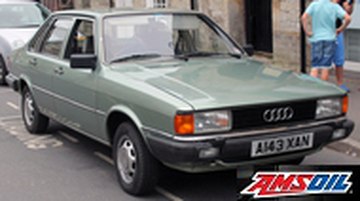
Catalog vehicle photograph for 1983 Audi 4000
Vehicle photograph from our catalog. Appearance may differ by model or trim.
Visit us on social media